
· Miko · business in mexico · 9 min read
Banco Plata Cuenta Empresa vs. BBVA Empresas: Which Is Better for a Small Business in Mexico?
A hands-on comparison of Plata and BBVA business banking in Mexico, covering fees, cash deposits, SAT and IMSS payments, delegation, and everyday usability.
Updated July 2026. Prices and features can change, especially because Banco Plata’s business account is new.
Finally! A serious new contender has entered Mexico’s business-banking ring.
I have been waiting for years for a reason to ditch BBVA Empresas (a customer of theirs since 2023). My main complaint is that it feels like a dinosaur: it technically can get the job done, but nearly every interaction is more cumbersome than it should be in 2026.
Banco Plata’s new Cuenta Empresa is much closer to what I expect business banking to look like in 2026. It doesn’t do everything yet (BBVA still has some important advantages) but it is already dramatically better in the areas that matter most to my small business.
This comparison is based on my experience operating a small brick-and-mortar business in Mexico. Your priorities may be different, particularly if your business handles a lot of cash.
| Category | Plata Empresarial | BBVA Empresas |
|---|---|---|
| Opening the account | 🏆 Winner | |
| Delegation and internal workflows | 🏆 Winner | |
| Paying employees | 🏆 Winner | |
| Cash deposits | 🏆 Winner | |
| SAT payments | 🏆 Winner | |
| Technology and usability | 🏆 Winner | |
| Accountant access | 🏆 Winner | |
| Fees | 🤝 Draw | 🤝 Draw |
| Overall winner for my business | 🏆 Winner |
Ready to try Plata?
Open your Plata account
Sign up for Plata →
Opening the account
Winner: Plata
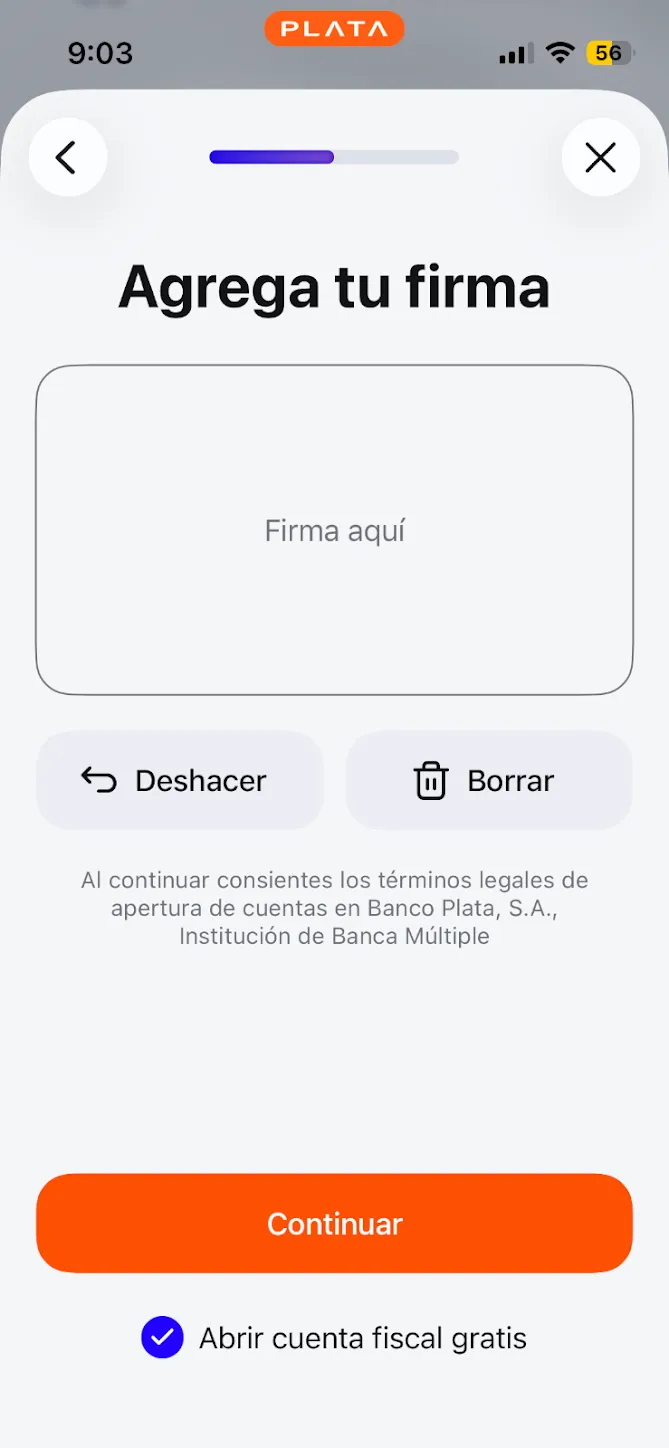
I opened my Banco Plata Cuenta Empresa entirely from my phone in the bathroom, and was approved before I stood up.
Admittedly, I already had a personal account with Plata, which probably made the process faster. I signed digitally, took a selfie and was approved within seconds. Plata’s website says that opening a new Cuenta Empresa normally takes up to two days.
Opening my BBVA business account, on the other hand, was an in-person process that required multiple visits to a branch. I also ran into a frustrating catch-22: BBVA wanted evidence that my business was already operating, while I wanted to open a business account before launching so I could keep personal and business expenses neatly separated.
I know business owners who have had their accountants help open their BBVA accounts simply because the process can be such a hassle.
Delegation and internal workflows
Winner: Plata
Plata lets you create virtual cards, which has several practical uses. In my case, I created a card specifically for the reception desk so my staff can reorder inventory from Mercado Libre without asking me every time.
I can also create additional users and give them limited permissions. This allows my reception staff to confirm that a transfer has arrived without giving them unrestricted access to the account, or requiring them to interrupt me whenever a customer pays.
BBVA’s authentication process creates much more friction. Logging in to the web app requires either a physical token or a special color QR code scanned with the mobile app. Plata instead sends a push notification to your phone for approval.
That may sound like a small distinction, but authentication design matters when you are trying to build repeatable business processes. Plata’s system makes delegation and routine administrative work easier.
Payroll and SUA/SIPARE payments
Winner: BBVA
Both banks can send transfers for regular payroll, but BBVA has an important advantage: it supports SUA/SIPARE payments for IMSS and INFONAVIT obligations.
Banco Plata currently does not.
BBVA’s implementation feels dated, but an outdated feature is still better than a missing one. If you have employees, this may be enough reason to keep a BBVA account open, even if it is no longer your primary operating account.
Cash deposits
Winner: BBVA
Cash deposits are one of Plata’s current weaknesses.
The app still shows the feature as “coming soon.” Plata’s documentation says cash deposits will be available through participating commission agents and Banco Plata-operated ATMs. Its current fee schedule lists:
- MXN 12.93 plus IVA per deposit at Kiosko
- MXN 30.17 plus IVA per deposit at OXXO
Availability and deposit limits may also be more restrictive than depositing through a traditional bank’s ATM network.
This is not a major issue for me because my business handles very little cash. However, it could be a dealbreaker for some of you.
Paying SAT taxes
Winner: Plata
Both Plata and BBVA let you pay your SAT tax online.
BBVA’s system works, but in my experience it requires entering a separate, older-looking section of its online banking platform. It also has operating-hour restrictions (9am-9pm), which makes little sense for an online service.
Plata integrates SAT payments more naturally into the web experience. It is simpler and feels like part of the same product rather than a separate legacy system attached to it.
Technology and usability
Winner: Plata
The BBVA Empresas experience has a lot of rough edges. I regularly encounter outages, broken features and processes that work only during certain hours. E.g. be very careful about logging out between making SAT tax payments, otherwise it will tell you you’re already logged in and force you to wait 15 minutes.
The mobile app is also surprisingly user-unfriendly. It will end your session after only a few minutes, sometimes while you are actively working. You had better type that 18-digit CLABE quickly.
Almost every operation in the web app requires another token confirmation, using either the physical token generator or your phone. Transaction history is limited, and certain online operations are unavailable outside business hours—which again makes little sense for an internet-based service.
Plata feels much closer to what a banking product should feel like in 2026. The interface is clear, the mobile and web experiences are more consistent, and authentication uses familiar tools such as Face ID, push approvals and text-message verification instead of passwords and physical tokens.
Plata is still new, so I am not claiming it will never have outages or technical problems. But its basic design is substantially better.
Sharing access with an accountant
Winner: Plata
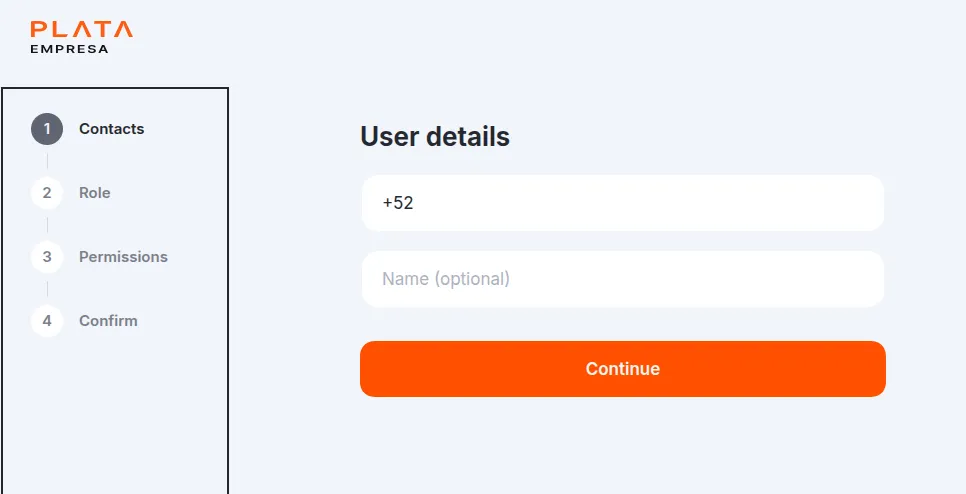
Plata lets you add users and assign them specific roles.
Before Plata, sending recent BBVA transactions to my accountant was absurdly manual. I would open the BBVA Empresas app, view the transactions, scroll down, take a screenshot, scroll down again and take another screenshot. I would repeat this until I had perhaps ten screenshots covering the previous 15 days.
Why not simply send the monthly statement? Because my accountant sometimes needs transaction information before the statement is available so he can issue invoices on time. The BBVA statement is not available until several days after the end of the month.
BBVA does offer more sophisticated user management through BBVA Net Cash, but it is a heavyweight corporate-banking product that is not designed for a business of my size.
When I tried to sign up, my branch initially told me that I needed at least MXN 120,000 in revenue. I was also quoted setup and licensing costs, a monthly fee and an additional token for my accountant. After I agreed, they sent me home and said they would contact me.
Later, I received an email saying the employee had made a mistake: the requirement was supposedly MXN 120 million, not MXN 120,000.
That was the end of that.
For reference, BBVA’s July 2026 public tariff lists a monthly Net Cash fee of MXN 830 plus IVA and MXN 810 plus IVA for each Bluetooth security token. If you publish additional setup or licensing prices, I would describe them explicitly as the quote your branch gave you rather than universal BBVA pricing.
Fees and pricing
Winner: Depends
Neither bank is expensive, but their pricing models are different.
Banco Plata currently offers three Cuenta Empresa packages:
- Independiente: MXN 99 per month + IVA
- Emprendedor: MXN 299 per month + IVA
- Empresario: MXN 599 per month + IVA
Independiente is currently marketed as costing as little as MXN 0: Plata’s terms waive its monthly fee when deposits are below MXN 25,000, and additional promotional waivers may apply. Plata is also offering two free months on certain newly opened accounts.
The higher plans add features such as web access, additional users, more physical cards and included CFDI issuance. Plata also offers unlimited outgoing SPEI transfers without an additional per-transfer fee.
BBVA uses a combination of monthly and transaction-based fees. Its July 2026 public tariff lists different prices for a Persona Física con Actividad Empresarial and a Persona Moral. For example:
- Monthly administration: MXN 150 for a PFAE or MXN 660 for a Persona Moral
- SPEI transfer: MXN 5 for a PFAE or MXN 6.50 for a Persona Moral
These prices are before IVA and may vary depending on the specific account or package. My actual BBVA charges have generally been lower, ranging from approximately MXN 37.70 to MXN 113 per month + IVA depending on my relatively infrequent activity.
Plata Pays Interest!
Make sure to factor into your calculation, one of the most important features of plata, interest!
At a 10% annual rate, an average balance of MXN 30,000 would generate approximately MXN 250 per month before tax just enough to cover the MXN 299 Emprendedor plan with the yearly discount. You would need an average interest-earning balance of about, MXN 60,000 to offset the MXN 599 Empresario plan’s yearly fee.
Ultimately, the cheaper option depends on your average balance, legal structure, and number of transfers.
Plata advertises returns of up to 11% through its Ahorro product. However, Cuenta Empresa itself is disclosed as a non-interest-bearing checking account. In other words, do not assume that all the money sitting in your operating account automatically earns 10% or 11%.
You would need to move eligible money into the relevant Ahorro product, and the applicable rate can change.
The verdict
For my business, Plata is the clear winner.
It is easier to open, easier to use and much better suited to delegating routine financial tasks to employees and an accountant. Those improvements save me more time and frustration than the monthly fee costs me.
BBVA still wins in two important areas: cash deposits and SUA/SIPARE payments. For that reason, I am not ready to close my BBVA account completely. I will probably keep it as a secondary account for those legacy banking functions while using Plata for day-to-day operations.
If you run a small service business, handle little cash and want modern user controls, Plata is probably the better primary bank. If you regularly deposit cash, BBVA is the obvious choice.
Plata is not yet a complete replacement for BBVA, but for the first time, it feels like there is a modern alternative.
Ready to try Plata?
Open your Plata account
Sign up for Plata →
Wishlist
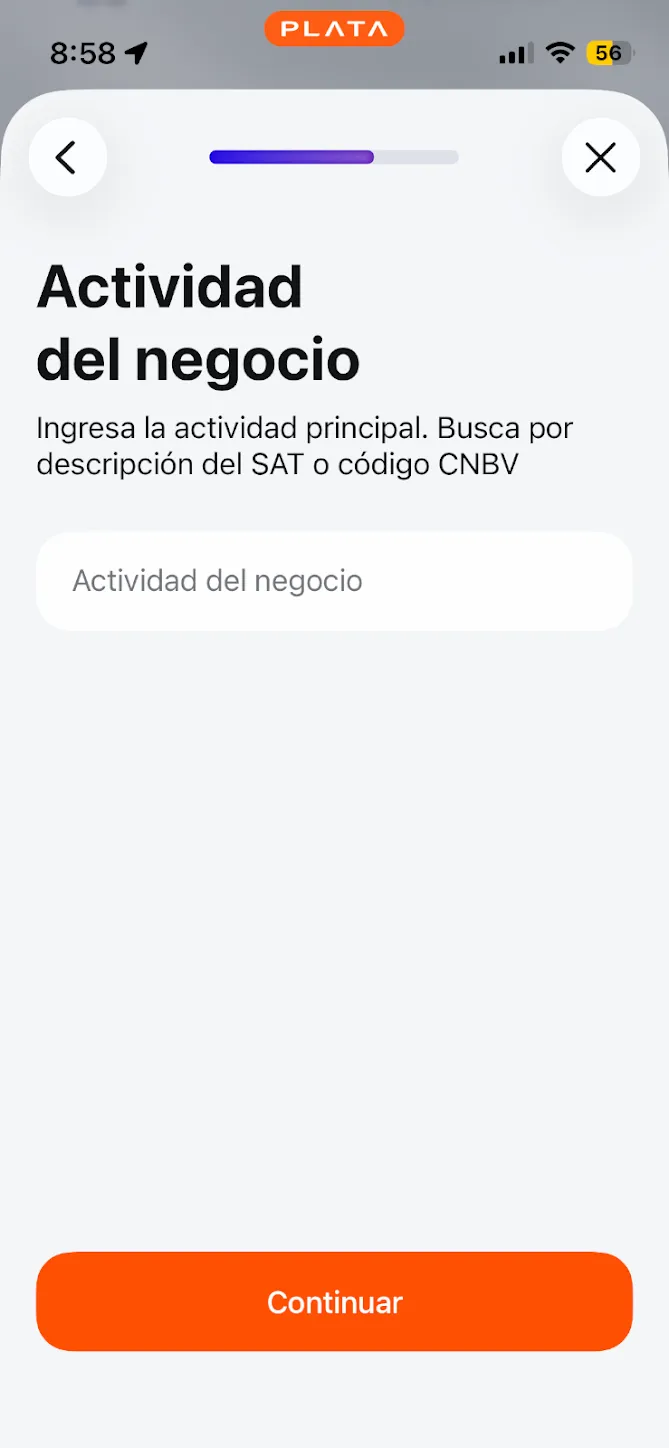
Plata is still missing some things I would love to see in the future. Whether it comes from Plata or another business banking account is to be seen:
- Automatic/recurring/scheduled payments
- Invoice reconciliation
- SUA/SIPARE obligation payments